
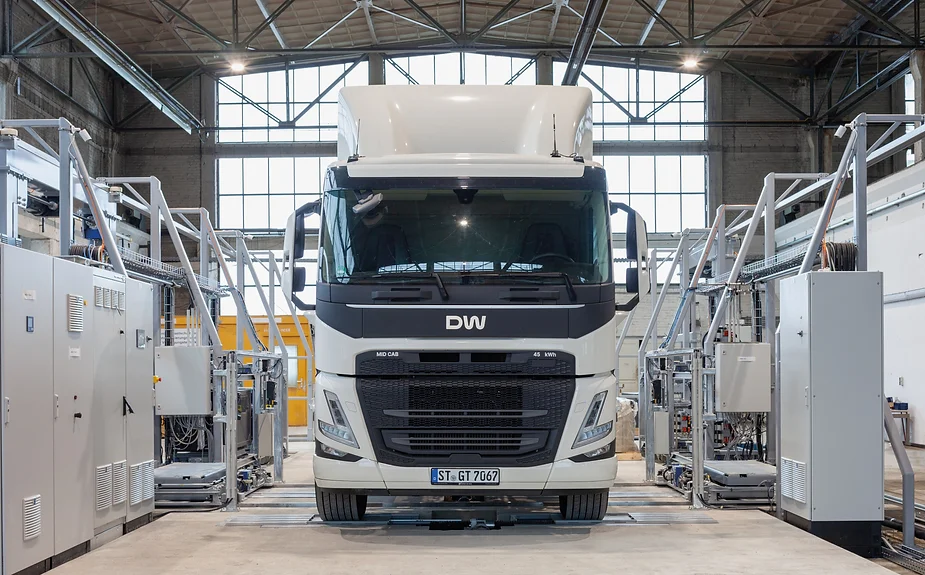
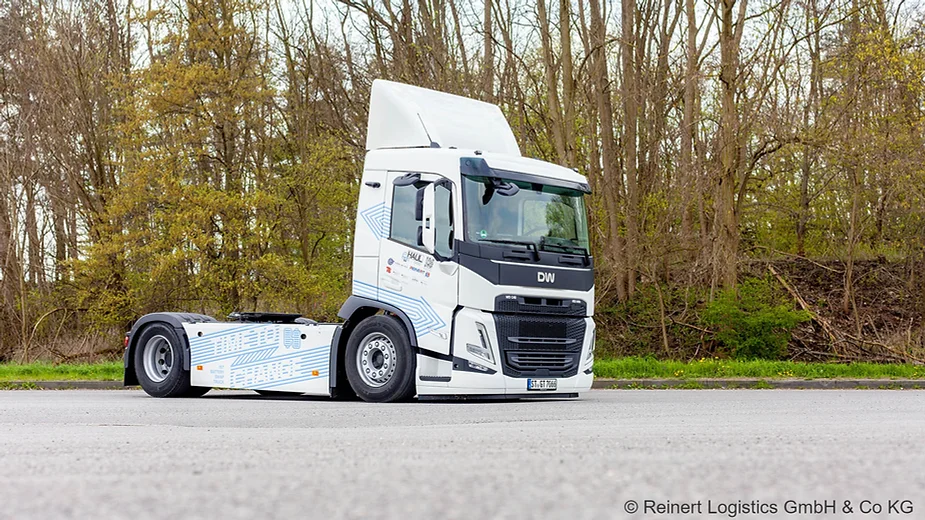
Automated battery changing works – even with commercial vehicle batteries weighing several tonnes and a time horizon of just a few minutes. This was clear at the latest when one of the eHaul tractor units rolled out of the hall with a freshly changed battery to applause during the changing station opening event. Of course, the work in the eHaul project is not yet finished, and there is still a lot to do in the practical phase that follows. From a technical point of view, there are still some optimisation steps to be taken, after which the service life of the vehicles, which is already comparable to a diesel refuelling stop, can be reduced even further, and of course the long-term test of the prototype system in practical operation with addressing any problems. The associated commitment of all project partners is worthwhile, as the technology offers enormous potential. The key message here is flexibility: flexibility for logistics companies using the technology, which retain considerable freedom in distribution thanks to short downtimes and a possible decoupling of loading times and compulsory breaks. They are given the opportunity to electrify large fleets at their home depot by building an exchange station with only moderate, available grid connection power or to completely dispense with their own charging infrastructure expansion by using a public exchange station, and they are able to realise considerable savings by decoupling battery and vehicle ownership.
Flexibility for grid operators: Swap stations charge flexibly – within specified limits – at low and constant power levels and preferably when there is a surplus of energy production or a low demand for electricity in the grid. By decoupling charging and switching at different times, they combine the functionalities of a charging station and an energy storage system and enable large numbers of vehicles to be supplied with a moderate expansion of the electricity grid infrastructure. The resulting rapid deployment of the technology is essential for a rapid market ramp-up of electromobility in the commercial vehicle sector and a unique opportunity for logistics companies to utilise the toll advantages of e-trucks in applications with high daily mileages in the coming years.Battery replacement offers all of this at competitive costs compared to diesel and alternative charging technologies such as megawatt charging or overhead lines. Even with relatively small, double-digit numbers of vehicles, it is possible to build privately viable island networks that can then grow together dynamically. The biggest challenge here is the standardisation of the interface between vehicle and battery across manufacturers, which would mean broad vehicle availability and maximised efficiency of the infrastructure.