
“Hydrocycle”, the motorbike for the hydrogen age
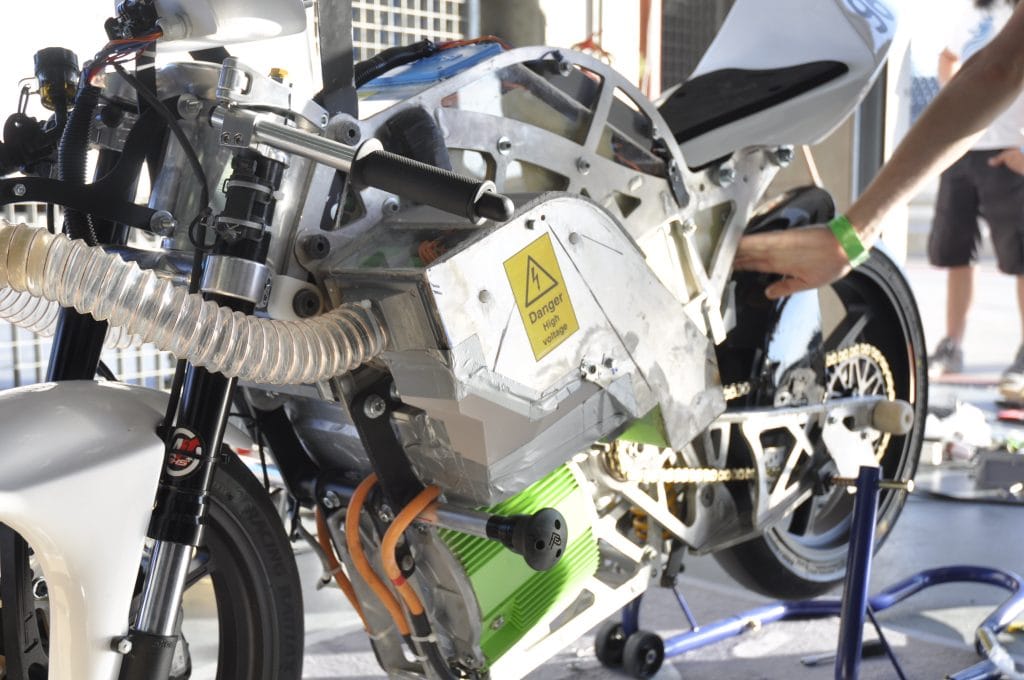
If 1 kilogram of hydrogen in a car allows a range of (around) 100 kilometres, an H2 tank for the electric drive can also be accommodated in the limited space of a motorbike. It is much more challenging to accommodate a complete fuel cell system in the frame construction, which is required ‘on board’ to convert the hydrogen into electrical energy. A German-Czech consortium of research institutions and manufacturing companies is now tackling this challenge: By the end of 2025, a drivable motorbike will be built as a demonstrator that meets the strict European approval standards and certification regulations.
The hydrogen bike is intended to serve as an inspiration for the mobility of the future. Due to its agility and compactness, the two-wheeler is interesting for inner-city delivery services and parcel deliverers. It enables CO2-neutral mobility and helps to reduce noise emissions. The advantage over battery-electric solutions lies in the longer range and shorter refuelling times.
Division of labour
In the Hydrocycle project, the partners from the Czech Republic are working on vehicle development and are driving forward the work packages vehicle structure, ergonomics and packaging (accommodating the technology in the available installation space).
Project background
Hydrocycle contributes to the European Union’s hydrogen strategy. The EU guidelines envisage a leading role for hydrogen from renewable energies in the transport sector from 2030, so that the Union can become climate-neutral by 2050.